Krissy Thompson
Hayden's TimbreKrissy Thompson is Crew Devillier’s biological mother, but the novel sharply separates biological maternity from the sustained work of parenting. She becomes known within Hayden Devillier’s circle as “The Bitch,” a name that records the family’s anger toward her abandonment and the damage attached to her return. Once connected to the band and to Ryan Powell, she uses pregnancy, deception, and later threats to disrupt the family Hayden, Ryan, and Peri Powell have built around Crew.
Identity and Background
Krissy enters Hayden’s history when he is eighteen and newly arrived in Austin with a guitar, a suitcase, and a truck to find his distant cousin Ryan Powell. Ryan brings him into the band, and Hayden quickly becomes part of the musicians’ close-knit circle. At that point, Assured Distraction is touring, and Hayden’s early adult life is defined by music, travel, and the relationships formed around the band. Krissy is the major exception to that sense of belonging: Hayden describes her as the one drawback to an otherwise immediate friendship with the group.
Her relationship with Hayden is marked by coercion and deception rather than mutual commitment. After Hayden rejects her advances and locks his door to keep her away at night, he finds her in his bed several times before anything can happen. She later becomes pregnant and insists that Ryan is the father, claiming that the pregnancy resulted from her last encounter with him. Ryan disputes the claim, and Hayden’s account makes clear that Krissy had a motive beyond identifying the child’s parentage: she wanted to trick Ryan into leaving the band, something he would not do.
Abandonment of Crew
The dispute continues through the pregnancy and Crew’s birth. Ryan eventually becomes involved with Peri, who also becomes pregnant and knows that Ryan is the father of her child. Krissy continues to claim that Crew belongs to Ryan, but by the time the baby is born, the surrounding adults understand that her story cannot be sustained. A paternity test, confirmed through blood types, proves that Ryan cannot be Crew’s father. Krissy then admits what she did to Hayden.
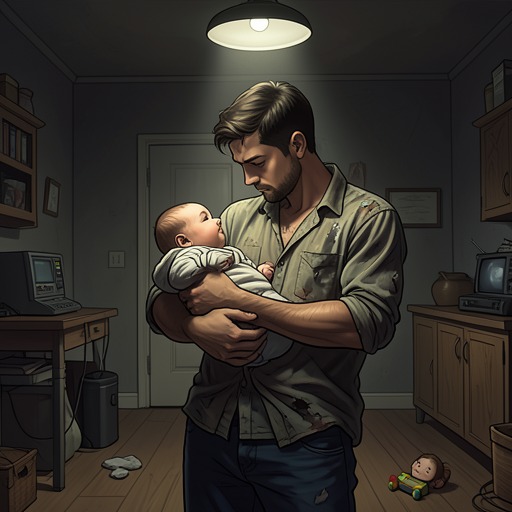
Her response to the child himself is even more revealing than the deception. Krissy refuses to hold Crew and will not give him a name. Hayden, who has been living with her and feels sorry for the infant, takes over his care. When Krissy leaves the next morning, she does not look back. She signs over all rights to Crew and never calls to check on him. Hayden is eighteen when Crew is born, yet he becomes the child’s sole dependable parent, while Peri and Ryan provide the extended household that helps them function as a family.
Krissy’s absence determines Hayden’s adult choices. Because Crew has asthma-related vulnerability and is allergic to cats, Hayden fears being away when his son might need him. He quits touring, writes music for several bands, works as a studio musician at 13 Recordings, and builds a stable life around Crew rather than pursuing rock-star success. The contrast is fundamental: Krissy treats motherhood as something she can reject when it no longer serves her, while Hayden organizes his entire career and identity around remaining available to his son.
Return and Violent Control
Krissy returns only after Timbre Simons has become important to Hayden, Crew, and the wider chosen family. She tells Timbre that she has watched her work her way into the lives of “my friends, my baby daddy, and my little bastard child,” presenting Hayden, Crew, and Ryan as possessions stolen from her. Her language turns family into property and replaces accountability for abandonment with a demand for restoration. She does not approach Crew as a mother seeking to repair a relationship; she treats Timbre as an obstacle and claims the right to remove her.
Working with Ella Sullivan, Krissy kidnaps Timbre and threatens her with a knife. Ella suggests physically disfiguring Timbre, but Krissy rejects that immediate form of mutilation because she wants Timbre removed from the family rather than simply injured. The distinction does not make Krissy less violent. She proposes sending Timbre away with a warning and threatens Crew as the means of enforcing silence, suggesting that they could carve a mark across the child’s forehead if Timbre returned or contacted the family. Crew’s innocence becomes a weapon in the struggle between adults.
The threats expose Krissy’s controlling logic. She uses the language of motherhood while refusing the responsibilities of care, and she invokes Crew’s status as her child while threatening the very person who has raised and protected him. Her claim to family is therefore inseparable from surveillance, intimidation, confinement, and weaponized fear. The novel contrasts this coercive possession with Hayden’s protective concern, though Hayden’s anger when Timbre rides a bus alone at night also shows how care can become forceful and overprotective. Krissy’s conduct, however, crosses into explicit criminal violence: she participates in kidnapping, displays a weapon, and threatens a child to control an adult victim.
Exposure and Armed Confrontation
The investigation into Timbre’s disappearance eventually identifies Krissy through fingerprints found in Timbre’s house. The police name her as Krissy Thompson, and the revelation shocks the adults because they already know her history. Crew is present but has never been told his mother’s name. Hayden has tried to shield him from the truth, yet the investigation makes concealment impossible and forces the family to confront the history Krissy represents.
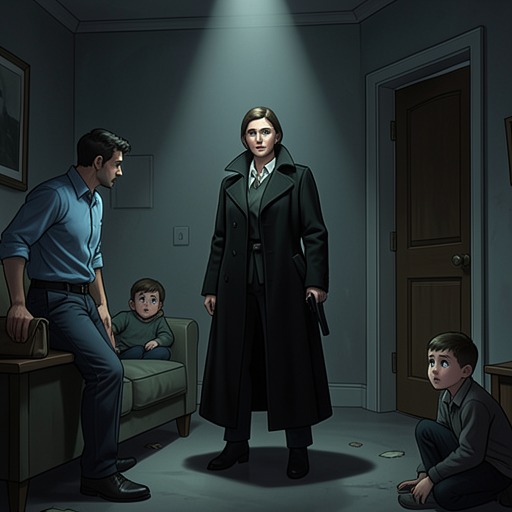
Krissy then comes directly to the Powell family home with Ella. Hayden is startled by her changed appearance: she is extremely thin, with hair like dried black straw, and looks radically different from the beautiful, carefully presented woman he remembers from the period surrounding Crew’s birth. Her physical deterioration suggests the passage of years and the consequences of a life far removed from the family she abandoned, but her manner remains recognizably domineering. She moves through the room as though she owns it and demands access to Crew.
Hayden places himself between Krissy and the boy when she tries to call Crew to her. Krissy refuses to let him leave her sight, and Ella draws a gun, declaring that the weapon gives them control. Krissy claims that she wants to get to know her son, but the armed intrusion turns that stated desire into another act of domination. Ryan shields Peri, Hayden protects Crew with his body, and the family’s emotional history becomes an immediate physical standoff. Krissy’s return thus culminates not in reconciliation but in the exposure of the gulf between maternal status and earned trust.
Narrative Significance
Krissy Thompson functions as the dark counterexample to the novel’s idea of chosen family. She is connected to Crew by biology, yet Hayden, Peri, Ryan, Nanny, and the friends of Assured Distraction perform the daily acts through which family is actually made. Hayden leaves touring and accepts a less glamorous professional life because Crew comes first; Crew later recognizes that a lonely person such as Timbre may need the kind of real friendship their household can offer. Against this ethic of care, Krissy understands attachment as ownership and return as repossession.
Her story also clarifies why Hayden’s relationships are governed by firm boundaries. He tells Timbre that Crew will always be his number-one priority and that he has avoided relationships because he is all the boy has. The family’s protectiveness toward Hayden extends beyond ordinary friendship: Assured Distraction regards him as a brother and warns Timbre that harming him would provoke a collective response. These commitments are not abstract sentiment; they are the social structure that allowed Hayden to raise Crew after Krissy walked away.
Krissy’s final significance lies in the fact that she cannot reclaim the family merely by naming herself Crew’s mother. Her biological connection gives her history, but it does not give her authority over the people who have loved, protected, and raised him. The later proposal in which Hayden and Crew ask Timbre to become Hayden’s wife and Crew’s mother offers the decisive counterimage: motherhood is presented as a chosen, mutual commitment, publicly affirmed by both father and son. Krissy’s return threatens that future, but it also reveals how completely the family’s real bonds have formed without her.